Skip to product information
1 of 5

NerdQX 8T | 8.0 TH/s Enterprise Desktop Solo Miner

NerdQX 8T | 8.0 TH/s Enterprise Desktop Solo Miner

Regular price $368.00 USD
Regular price Sale price $368.00 USD
Sale Sold out
Shipping calculated at checkout.

High-Density 8.0 TH/s Hashrate at 170W
Industrial-Grade 250W PSU with Gold-Plated XT60 Interface
Autonomous AxeOS Node with 2.4G WiFi Setup
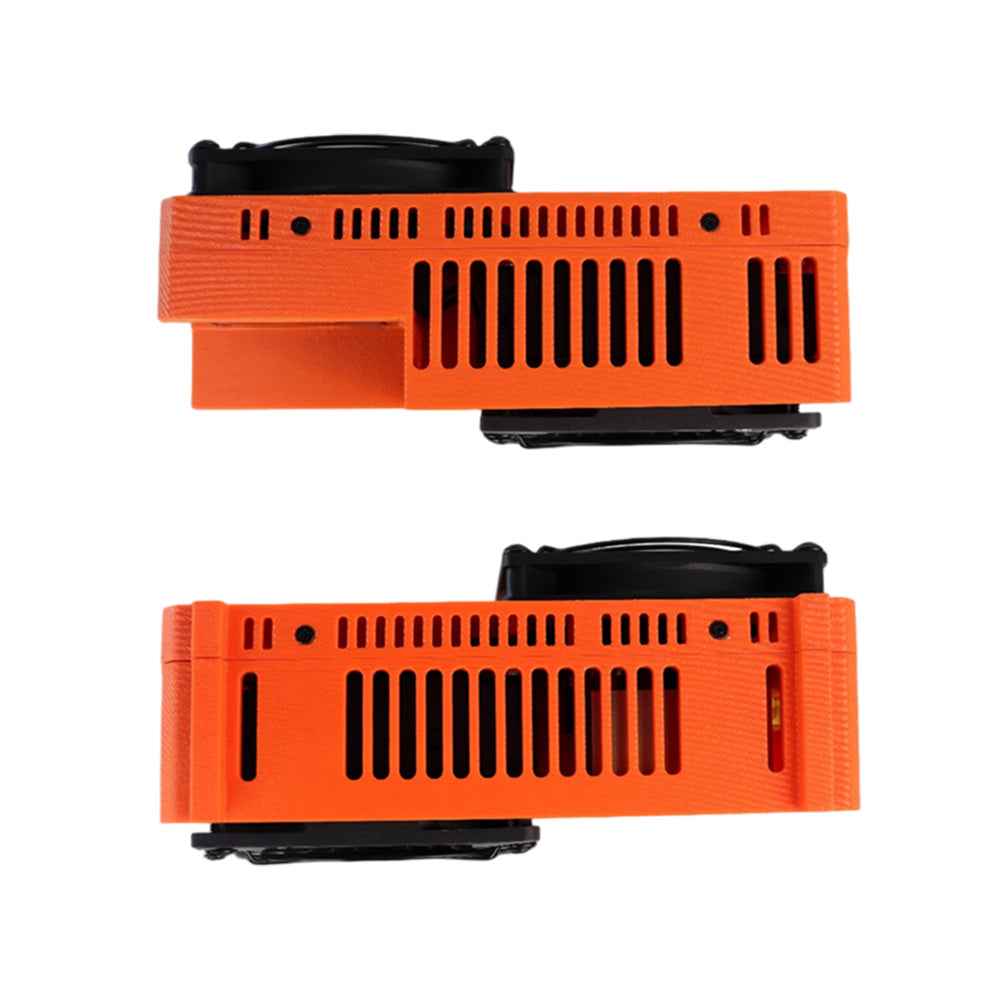
Custom Copper Heat-Pipe & PWM Fan (Typical < 45 dB)
Flexible SOLO, PPLNS, and PPS Mining Modes

Buy on Newegg - Official Retail Store

Rewards Estimate

AlgorithmSHA-256
Miner Hash Rate...
BTC at Fetching...
Block Reward (Jackpot)
...3.125 BTC
Per Block...
Per Day...
Per Week...
Per Month...
Daily Revenue...
Daily Electric...
Daily Profit...
Est. ROI...
Estimates only based on current difficulty. Pool mining profitability depends on electricity costs.

Specification

ASIC Chip: Bitmain BM1370 (Multi-Chip Array)
Crypto Algorithm: SHA-256
Hashrate: 8.0 TH/s (±5%)
Power Consumption: 170W (±10%)
Energy Efficiency: ~21.25 J/TH (±10%)
Power Supply: Dedicated 250W Switching Power Supply (12V DC via XT60 Interface)
Network Architecture: WiFi 2.4G Standalone Node (AxeOS Firmware)
Thermal Management: Custom Copper Heat-Pipe + Auto-Calibrating PWM Fan
Noise Level: Typical < 45 dB
✅Product Dimensions: 185 x 8 x 115 mm
Net Weight: 0.77 kg

Why Buy From Us

Get the most hashrate per dollar. We offer top-tier open-source solo miners at unbeatable prices with 100% transparent specs. Join our independent maker community for reliable hardware, fast shipping, and a true out-of-the-box mining experience.

Downloads


📂Get hashing in under 5 minutes. [Read the Official NerdQX 8T User Manual & Setup Guide]

View full details

The High-Efficiency Multi-Chip Desktop ASIC

Precision-engineered for desktop deployment, the NerdQX 8T is the ultimate hardware for technical hobbyists and open-source node operators. Powered by a synchronized array of enterprise-grade Bitmain BM1370 ASIC silicon, it delivers a dependable 8.0 TH/s cryptographic hashing infrastructure. Packaged within a compact, desktop-friendly form factor, it provides absolute operational adaptability without the industrial noise, making it the premier choice for scaling your personal solo mining setup.

Powered by Next-Gen BM1370 Architecture

Command a sustained 8.0 TH/s (±5%) cryptographic output directly from your desk. The NerdQX 8T draws a stable 170W under load and utilizes a dedicated 250W switching power supply with a heavy-duty, gold-plated XT60 interface to guarantee zero voltage drops during peak continuous compute cycles. Operating at a typical noise level below 45 dB, the system deploys a custom copper heat-pipe dissipation substrate paired with a reactive PWM fan that self-calibrates based on real-time ASIC silicon temperature telemetry. Fully standalone, the integrated 2.4GHz wireless architecture runs on the open-source AxeOS stack, enabling rapid deployment via an embedded web console without any external controller dependencies or Raspberry Pi overhead.

Frequently Asked Questions (FAQ)

Q: Is hashrate or power fluctuation normal?

A: Yes. Hashrate fluctuations of ±5% and power variations of ±10% are within normal operating ranges depending on the computational load, ambient temperature, and operational frequency scaling.

Q: Can the device be used in a closed cabinet or enclosed space?

A: No. Enclosed spaces restrict the active airflow required by the heatsink and PWM fan, which may cause overheating, thermal throttling, or a protective shutdown. Always ensure the device operates in a well-ventilated area between 0-35°C.

Q: Why is the fan loud upon startup?

A: During startup or under high network load, the PWM fan automatically increases its speed to rapidly enhance cooling and balance internal temperatures. This is normal behavior, and the typical operating noise will soon stabilize below 45 dB.

Q: Does the NerdQX require an external Raspberry Pi or controller?

A: No. The device features an autonomous node architecture running on the open-source AxeOS environment. You can provision the system and access the embedded web-based telemetry and diagnostics console strictly via its standalone 2.4GHz wireless protocol node.

Q: What is the maximum Core Voltage setting?

A: For system stability, do not set the Core Voltage above 1.15V. Setting higher values may trigger the 250W power adapter's internal protection mechanisms and cause the unit to shut down or become unstable.